Football Travel · 7 min read
5 Stadiums You Have to Visit as a Football Fan
17 September 2026
Some football grounds are worth the journey before a ball has even been kicked. These five stadiums turn a matchday into something you will talk about for years: a quarry, a crater, an Atlantic hillside, a shopping-centre roof and a pitch squeezed between medieval fortresses.
They are not simply big grounds with loud crowds. Each one belongs completely to its surroundings — and each should be on a football fan's travel list.
| # | Stadium | Home club | Capacity |
|---|---|---|---|
| 1 | Estádio Municipal de BragaBraga, Portugal | SC Braga | 30,286 |
| 2 | Stadion Gospin DolacImotski, Croatia | NK Imotski | Approx. 4,000 |
| 3 | SvangaskarðToftir, Faroe Islands | B68 Toftir | Approx. 6,000 |
| 4 | Stadion VoždovacBelgrade, Serbia | FK Voždovac | 5,200 |
| 5 | Igralište BatarijaTrogir, Croatia | NK Trogir 1912 | Approx. 1,000 |
1. Estádio Municipal de Braga — Portugal
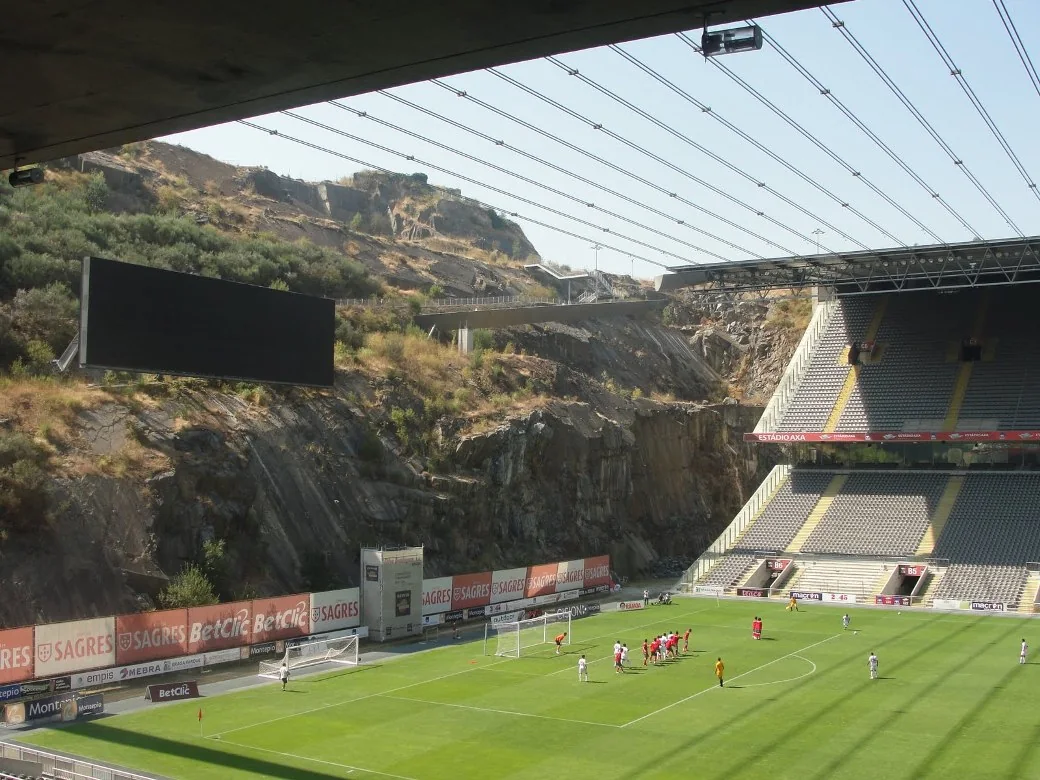
Estádio Municipal de Braga stands on its own for sheer individuality. Built for Euro 2004 and designed by Eduardo Souto de Moura, it was carved into the former Monte Castro granite quarry — earning the nickname A Pedreira, or “The Quarry”.
There are just two huge stands running along the touchlines. Behind one goal rises the exposed rock face; beyond the other is an open view across Braga. Steel cables stretch between the stands to hold the roof, giving the whole place the feel of a suspension bridge hanging over a football pitch. Those two stands still hold more than 30,000 people, so a big SC Braga night can sound every bit as dramatic as the setting looks.
- Where
- Braga, Portugal
- Home club
- SC Braga
- Capacity
- 30,286
- Why go
- Football inside a granite quarry
2. Stadion Gospin Dolac — Croatia
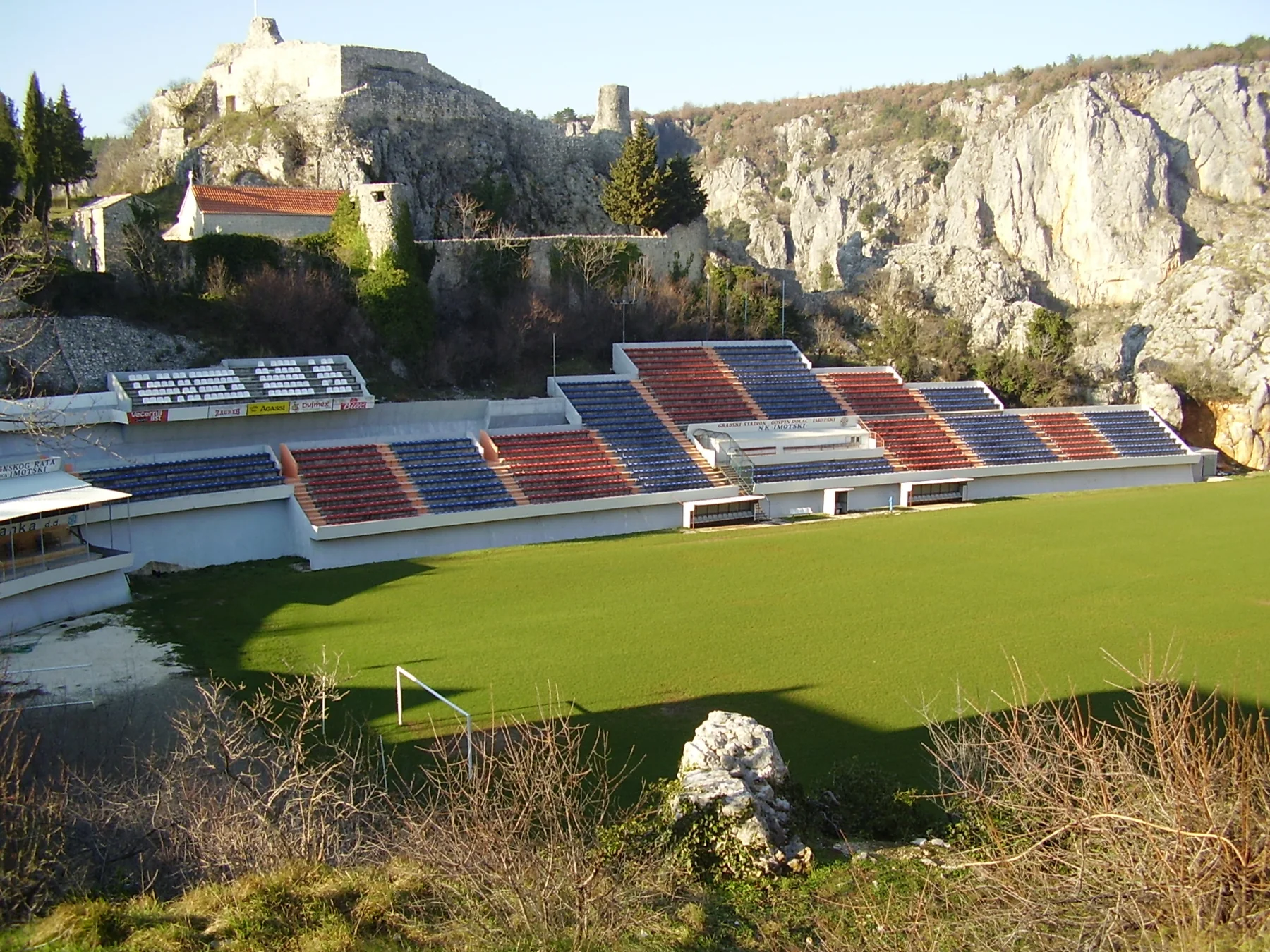
Stadion Gospin Dolac is old-school football dropped into scenery that would make a postcard jealous. The ground was built in a natural karst sinkhole beneath the historic Topana Fortress, with steep limestone cliffs framing the pitch. Just beyond the fortress lies Imotski's famous Blue Lake.
Completed in 1989 after years of work, it is intimate rather than enormous — and that is precisely the appeal. A match here feels woven into the town and landscape, not sealed away from them. Whether it is part of a Croatian road trip or the entire reason for your visit, Gospin Dolac is one of those grounds that barely looks real until you are standing above it.
- Where
- Imotski, Croatia
- Home club
- NK Imotski
- Capacity
- Approx. 4,000
- Why go
- Cliffs, a fortress and the Blue Lake
3. Svangaskarð — Faroe Islands
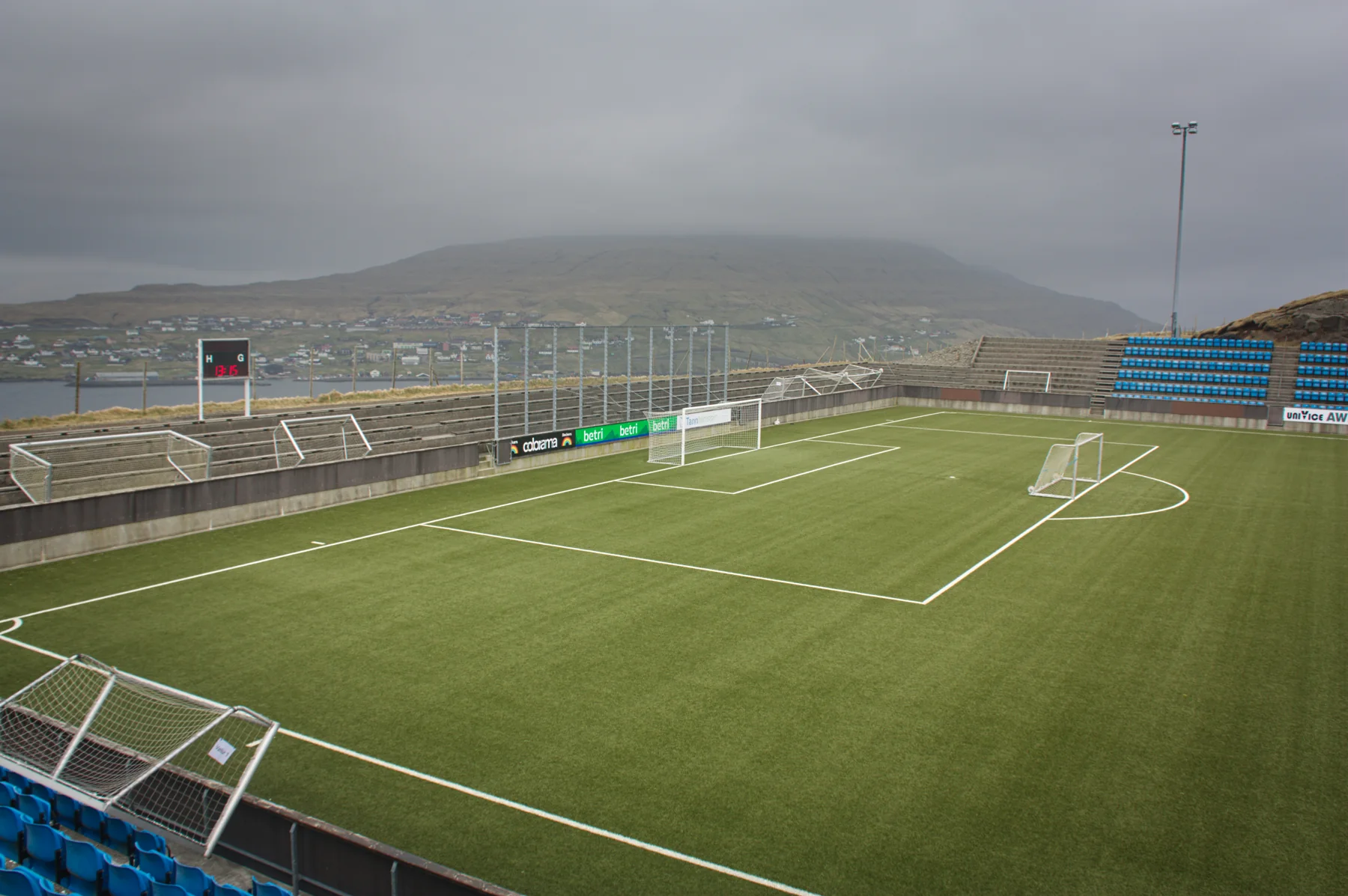
If you want to escape city life without giving up your football, Svangaskarð is the answer. The home of B68 Toftir sits high above the water on Eysturoy, surrounded by steep hills and the wild North Atlantic landscape.
Opened in 1980, the ground staged Faroe Islands internationals before Tórsvøllur became the national stadium. Today it offers a matchday that is unmistakably Faroese: a compact crowd, fast-changing weather and enormous coastal views. Take a proper jacket, find a spot in the stand or on the hillside, and enjoy football at one of Europe's most remote and atmospheric outposts.
- Where
- Toftir, Faroe Islands
- Home club
- B68 Toftir
- Capacity
- Approx. 6,000
- Why go
- North Atlantic views from the hillside
4. Stadion Voždovac — Serbia
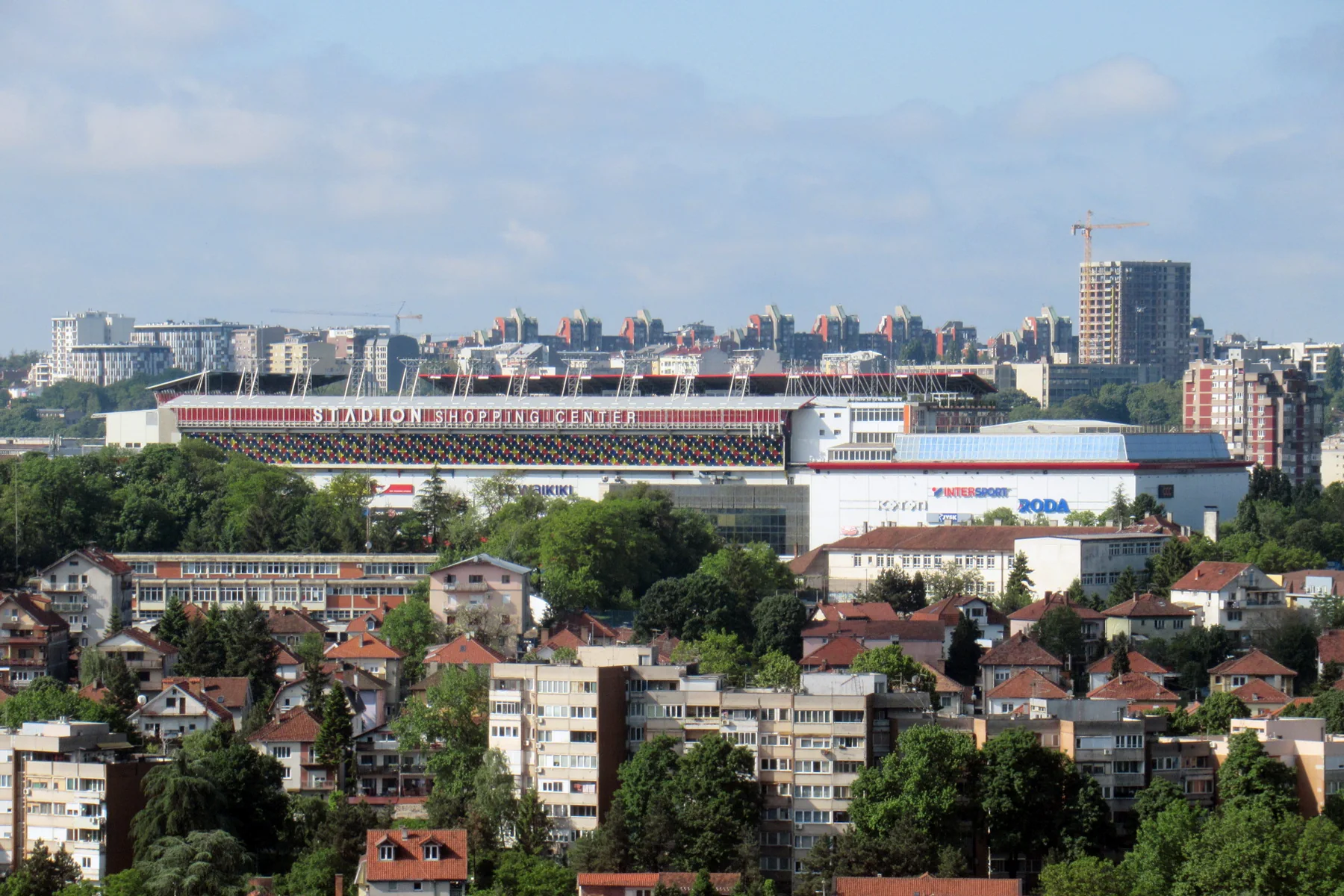
We have all endured an overlong shopping trip while searching for the nearest comfortable seat. Belgrade has the solution: put a football stadium on the roof. Stadion Voždovac was completed in 2013 on top of the Stadion Shopping Center and is one of the world's few rooftop professional grounds.
The 5,200-capacity home of FK Voždovac sits several storeys above street level, with separate stadium access taking supporters up to a fully enclosed artificial pitch. It is compact, modern and brilliantly odd — the sort of ground that proves memorable stadium design does not need a giant budget or 60,000 seats.
- Where
- Belgrade, Serbia
- Home club
- FK Voždovac
- Capacity
- 5,200
- Why go
- A professional stadium on a shopping-centre roof
5. Igralište Batarija — Croatia
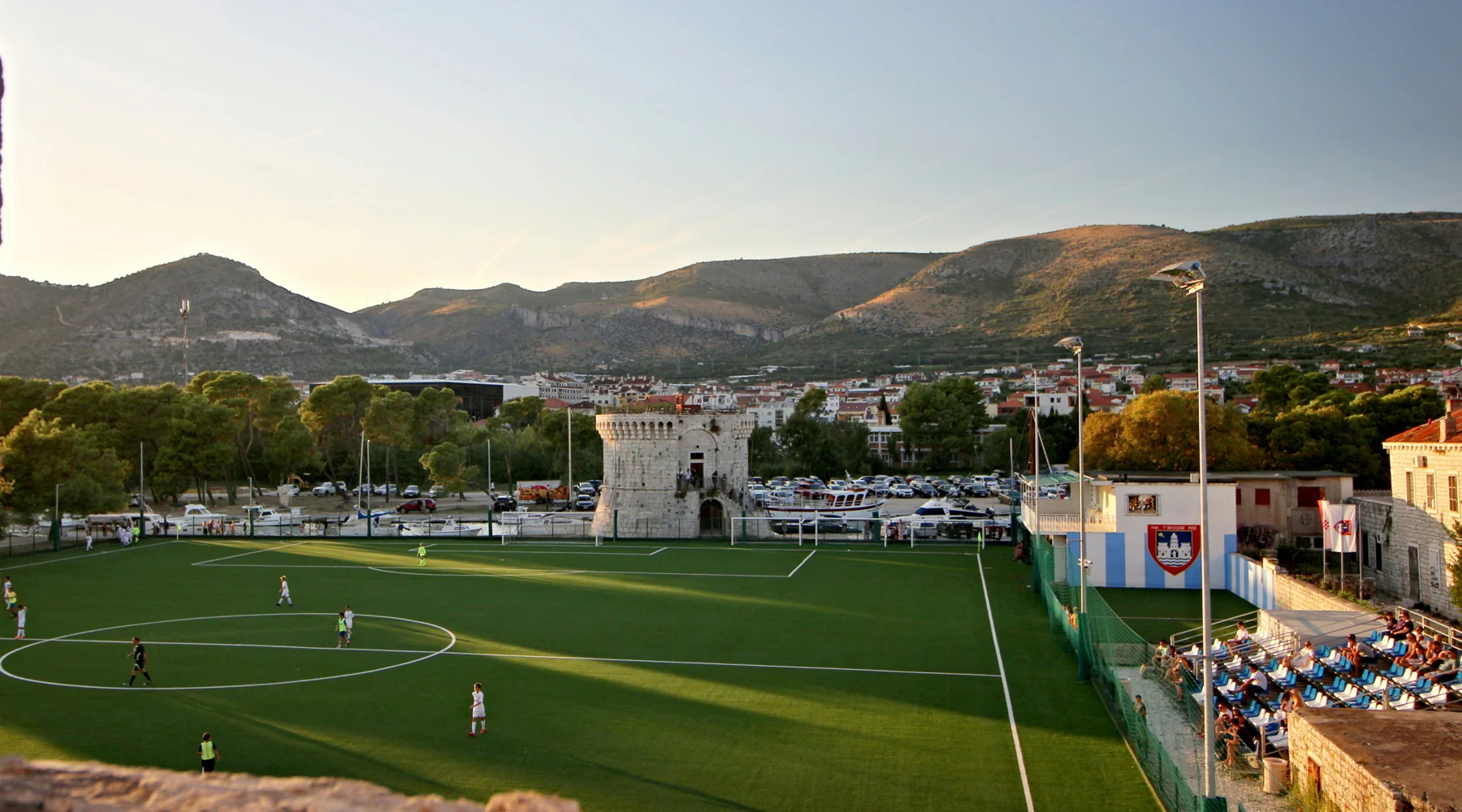
Our top spot goes to Igralište Batarija in Trogir. Football has been played on this site since 1912, but its location makes it feel as though the game has been dropped into a much older world. The pitch is wedged between the 15th-century Kamerlengo Castle and St Mark's Tower, only a short walk from the Adriatic waterfront.
The current home side is NK Trogir 1912, and the small scale only makes the experience better. You are close to the football, the battlements rise over the touchline and Trogir's UNESCO-listed old town surrounds you. Very few grounds can offer a pre-match walk through medieval lanes, football between two fortifications and a post-match drink by the blue Croatian sea. Unbelievable stuff, Jeff.
- Where
- Trogir, Croatia
- Home club
- NK Trogir 1912
- Capacity
- Approx. 1,000
- Why go
- Football between two medieval fortifications
Plan the match, not just the photograph
Fixtures and access can change, particularly at smaller grounds. Check the club's current schedule and ticket information before booking travel — then leave enough time to explore the remarkable setting around each stadium.
Think you know your football?
Put it to the test — daily quizzes, stadium rounds and head-to-head duels.
Play a quiz